Our farmers have been growing crops the way their fathers and grandfathers taught them. It’s what they know and trust. But times are changing fast, and so is the weather, the market, and the cost of farming. That’s why it’s important to talk about smart agriculture — using simple tools and technology to help them grow more with less effort, save water, cut down costs, and make better decisions for their farms. It’s not about leaving behind what they know, but about improving it to secure their future.
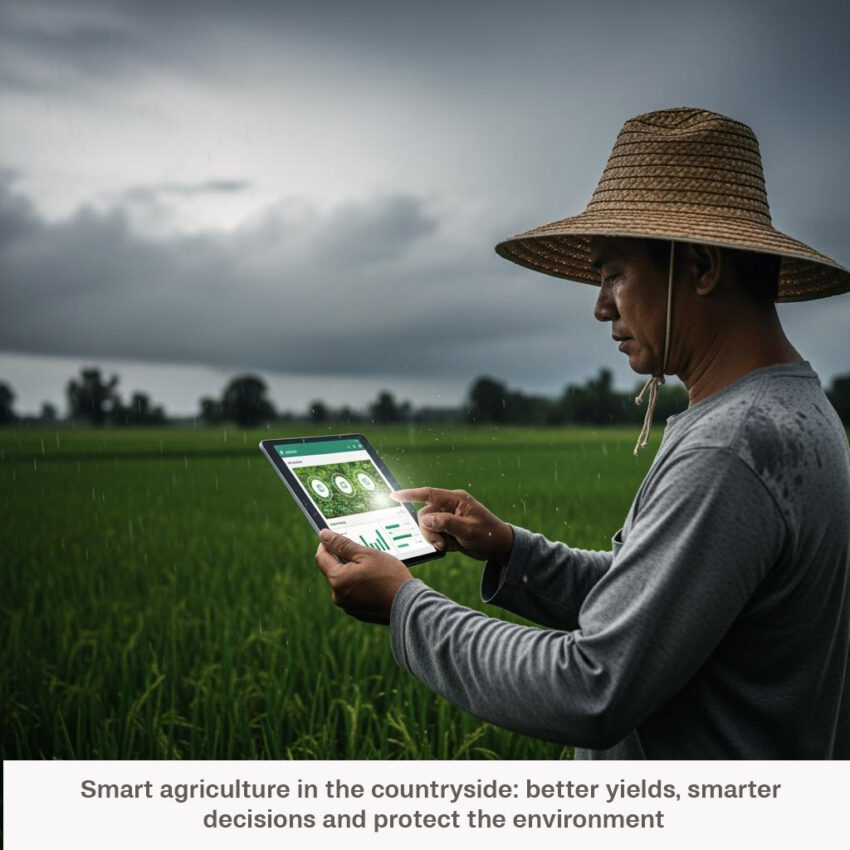
So, what is smart agriculture? It’s a way of farming that uses technology to make work easier and more efficient. Things like sensors in the soil that tell when to water, weather apps that help plan the best time to plant or harvest, and even drones or small machines that can check their crops and spot problems early. With smart agriculture, farmers don’t have to guess—they use real information to make better choices.
It also includes things like drip irrigation systems that save water, mobile apps that show us market prices, or even tools that help track fertilizer use so they don’t waste money or harm the soil. Farmers don’t need to be scientists or have a lot of money to start. Even small steps can make a big difference. It’s all about working smarter, not harder, and making sure their farms can keep feeding their families and communities for years to come.
In the end, smart agriculture isn’t about replacing our traditional knowledge—it’s about adding to it. Our farmers already know how to farm; now it’s time to make it easier, more profitable, and more sustainable. By using simple tools and embracing small changes, farmers can protect their land, save time, and increase their yields. Let’s not wait to be left behind—let’s lead the way and show that with the right mix of tradition and technology, farming can have a strong and secure future.
Comments are closed, but trackbacks and pingbacks are open.